E-mail: sachikoo_sz@yeah.net
Telephone: +86-13118819569

Views: 0 Author: Site Editor Publish Time: 2025-10-09 Origin: Site


Ever wondered why hotels still have analog landline telephones in guest rooms? Despite the rise of mobile technology, in-room phones remain essential. They ensure safety, convenience, and accessibility for guests. In this article, you'll learn about the historical significance, modern trends, regulations, and the future of hotel telephones.
In-room telephones have been a staple in hotels since the early 20th century. Initially, they were introduced to provide guests with direct access to hotel services and external lines without leaving their rooms. This innovation transformed guest convenience, making it easier to request services like room service, housekeeping, or front desk assistance. The telephone quickly became a symbol of modern hospitality, representing a hotel's commitment to guest comfort and accessibility.
Traditionally, hotel room phones served multiple critical functions:
● Guest Convenience: Guests used phones to communicate internally, such as calling the front desk or housekeeping, and externally for personal or business calls.
● Emergency Communication: Phones offered a reliable way to reach emergency services or hotel security, especially before mobile phones became widespread.
● Service Efficiency: Speed dial buttons allowed one-touch access to key hotel departments, streamlining service requests and enhancing guest satisfaction.
● Revenue Generation: Phones facilitated orders for room service, spa appointments, and other paid amenities, contributing to hotel income.
Hotels often placed phones strategically on desks or nightstands for easy access. Upscale rooms sometimes featured multiple phones, including locations like bathrooms and living areas, to ensure guests could reach assistance from anywhere.
For decades, guests expected a phone in their hotel room as a basic amenity. It was seen as essential for communication, safety, and convenience. This expectation was particularly strong among older generations who grew up relying on landline phones. Even business travelers valued in-room phones for quick, dependable communication.
Despite technological advances, this expectation has persisted. Many guests still appreciate the ease of using a hotel phone to reach services without navigating mobile apps or personal devices. The presence of a phone reassures guests they have direct access to help or information anytime.
Over time, while mobile phones have become ubiquitous, the traditional hotel phone remains a trusted and familiar tool. It continues to represent reliability, safety, and personalized service, especially in emergencies or areas with poor cellular reception.
Note: Understanding the historical role of in-room phones helps hotels balance tradition and innovation, ensuring guest expectations for convenience and safety are met effectively.
Mobile phones have changed how guests communicate in hotels. Most travelers carry smartphones, so they often skip using the in-room phone for personal calls. Mobile apps now allow guests to order room service, book spa appointments, or contact the front desk directly from their devices. This reduces the need for traditional landline phones for everyday communication.
However, mobile phones depend on battery life and cellular signal, which can be weak or unreliable in some hotel locations. In contrast, in-room phones provide a stable, always-available connection. Many guests, especially older generations, still prefer the simplicity and reliability of a hotel phone for quick access to services or emergencies.
Hotels are increasingly adopting smart room technologies to improve guest experience. Voice-activated assistants like Amazon Alexa or Google Assistant are becoming common in rooms, enabling guests to control lighting, temperature, and entertainment systems through voice commands. These devices also help guests request services without picking up a phone.
Despite this, experts believe traditional phones won't disappear soon. They offer a secure, direct line for emergencies and hotel communication. Some modern hotel phones now integrate with smart assistants, combining old and new technologies for convenience and safety.
Several trends are shaping hotel communication systems today:
● VoIP Systems: Voice over Internet Protocol (VoIP) is widely used in new hotels, offering cost savings and better integration with other digital services. VoIP supports features like voicemail, wake-up calls, and direct transfers.
● Custom Speed Dials: Phones with programmable speed dial buttons simplify contacting hotel services, boosting guest satisfaction and hotel revenue.
● Cordless and Compact Designs: Modern phones are smaller and may include cordless handsets, giving guests freedom to move while on calls.
● USB Charging Ports: Many hotel phones now feature USB ports for charging guest devices, blending communication and convenience.
● Antibacterial Materials: Phones made from antibacterial plastics help maintain hygiene, protecting guests and staff.
While mobile technology grows, hotels balance innovation with tradition. In-room phones remain essential for safety, accessibility, and certain guest preferences. The future likely holds hybrid solutions combining mobile apps, smart assistants, and reliable landline phones to meet diverse guest needs.
Whether hotels must have phones in guest rooms depends partly on local laws. Some regions require landline phones for safety and accessibility. For example, laws may mandate phones for emergency calls or for guests with disabilities. These regulations vary widely, so hotels must check rules in their area. Ignoring these can lead to fines or legal trouble.
Even where no law demands phones, many hotels keep them to meet basic safety standards. Phones offer a direct, reliable way to reach hotel staff or emergency responders. This is especially important in areas with poor cell coverage or for guests unfamiliar with local emergency numbers.
Safety is a top priority in hospitality. In-room phones act as a lifeline during emergencies. Unlike mobile phones, they don’t rely on battery power or signal strength. They connect instantly to emergency services or hotel security.
Accessibility laws often require hotels to provide communication tools for guests with disabilities. Phones equipped with TTY (Text Telephone) or other assistive features ensure all guests can reach help or services easily. Removing phones without providing alternatives may violate these requirements.
Hotels also use phones to enhance safety by programming emergency speed dials. Guests can press a single button to call 911 or on-site security. This quick access can save lives during fires, medical emergencies, or security threats.
In emergencies, every second counts. In-room phones provide a stable, easy-to-use communication channel. They identify the exact room location to responders, unlike mobile calls that may only give an approximate position. This precise information speeds up response times.
Phones also work during power outages if connected to backup systems. Mobile networks might fail during disasters or heavy traffic. Thus, phones remain a critical backup communication tool.
Hotels often place phones in multiple locations in premium rooms, such as bedrooms and bathrooms, ensuring guests can call for help from anywhere. This placement is part of a broader safety strategy.
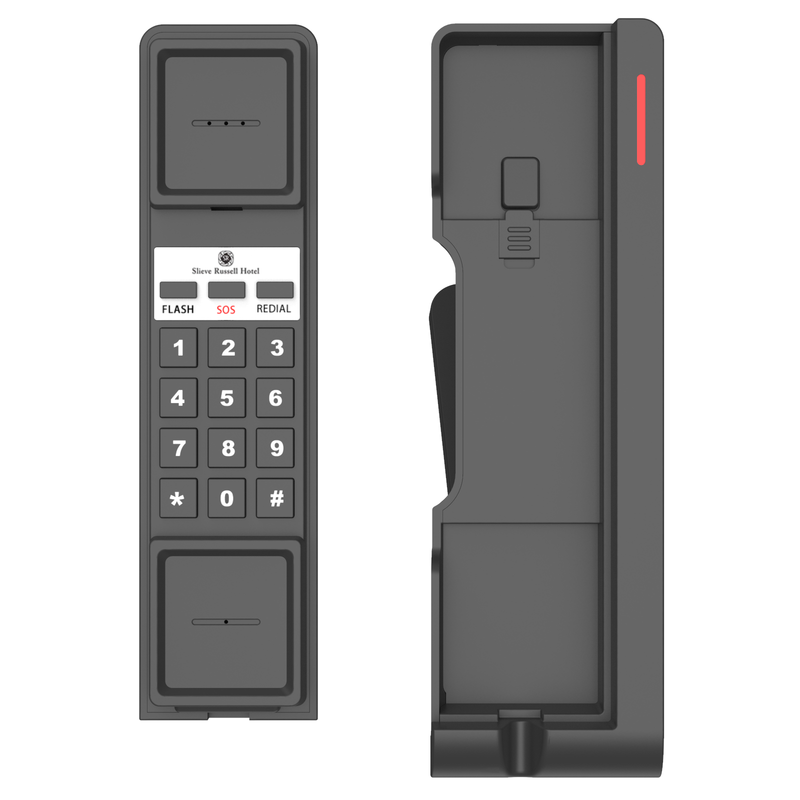
Most major hotel brands include in-room phones as part of their standard amenities. This consistency helps maintain a familiar guest experience across locations. For example, business travelers often expect a reliable phone to quickly reach the front desk or request services. High-end hotels also view phones as a mark of quality and professionalism, reinforcing their brand image.
Guests still appreciate the simplicity of a phone for immediate communication. While mobile devices are common, not all guests want to use apps or search for contact info. Phones provide a direct, easy way to connect without extra steps. This matters especially for older guests or those less comfortable with technology.
Hotels aiming to meet or exceed guest expectations typically keep phones in rooms, sometimes upgrading them with modern features like speed dial buttons or USB charging ports. These features enhance convenience and align with brand promises of comfort and service.
Hotel policies about in-room phones often balance guest needs, safety, and cost. Some hotels mandate phones in every room due to safety regulations or brand requirements. Others may offer phones selectively, such as in premium rooms or where cell coverage is weak.
Policies usually include guidelines on phone placement, accessibility features, and maintenance. For example, phones must be easy to find and use, sometimes requiring TTY compatibility for guests with hearing impairments. Hotels also decide how many speed dial options to offer, focusing on services that improve guest satisfaction and generate revenue.
In some cases, hotels allow guests to opt out of in-room phones, especially if they provide alternative communication methods like mobile apps or tablets. However, completely removing phones remains rare due to safety concerns and guest preferences.
Several leading hotel chains illustrate how policies shape phone availability:
● Marriott International: Maintains phones in all rooms, emphasizing emergency access and guest convenience. Marriott also programs speed dial buttons for services like room service and housekeeping, supporting upselling efforts.
● Hilton Hotels: Combines traditional phones with digital solutions. Phones remain standard, but Hilton encourages guests to use its mobile app for additional services. Phones feature USB charging and easy-to-use interfaces.
● Hyatt Hotels: Focuses on guest preferences by offering phones with modern designs and features. Hyatt integrates phones with VoIP systems, enhancing call quality and reducing maintenance costs. Emergency dialing is a key feature.
● Boutique Hotels: Some boutique or lifestyle hotels experiment with removing phones, relying on mobile apps and smart room tech. However, they often provide phones in common areas or upon request to ensure guest safety and accessibility.
These examples show a trend toward blending tradition and innovation. Phones remain a core part of guest communication, but hotels tailor policies to fit their brand identity, guest demographics, and technological capabilities.
Maintaining landline phones in guest rooms adds ongoing costs for hotels. These include purchase price, installation, wiring, and regular upkeep. Phones can suffer wear and tear, requiring repairs or replacements. Hotels must also manage phone system software and hardware updates, especially when using VoIP technology. While these expenses add up, phones remain a vital amenity for many guests, justifying the investment.
Some hotels try to cut costs by reducing the number of phones or removing them from certain room types. However, this can affect guest satisfaction and safety. Balancing cost savings against guest expectations is crucial. Investing in durable, modern phones can lower maintenance needs and improve reliability, saving money long-term.
Many hotels explore alternatives to traditional in-room phones. Mobile apps let guests contact hotel services directly from their smartphones. In-room tablets or smart assistants like Alexa offer voice-activated service requests. These technologies can reduce reliance on landlines and offer modern conveniences.
However, alternatives have limitations. Mobile devices depend on battery life and cellular or Wi-Fi signals, which may be weak or unreliable. Not all guests feel comfortable using apps or voice commands, especially older travelers. Accessibility features in phones, like TTY, may not be fully replicated by alternatives.
Some hotels adopt hybrid approaches, keeping phones while offering apps and smart devices. This ensures communication options suit all guests.
Hotels face a challenge: reduce expenses without compromising guest experience. Removing phones may save money but risk guest complaints or safety issues. Guests value the simplicity and reliability of a phone for quick access to services and emergencies.
Hotels can optimize costs by selecting versatile phones with multiple features. For example, phones with programmable speed dial buttons encourage service usage, boosting revenue. Phones with USB charging ports add convenience, enhancing guest satisfaction.
Careful placement and design help phones blend into room decor, avoiding a bulky or outdated look. Customizable faceplates allow branding and clear labeling, making phones easy to find and use.
Regular maintenance schedules prevent phone failures and keep systems updated. Training staff to promptly respond to phone requests ensures smooth guest communication.
One of the best ways hotels can boost guest satisfaction is by programming in-room phones with speed dial buttons. These buttons give guests instant access to key hotel services like reception, housekeeping, room service, or spa reservations. Instead of searching for phone numbers or navigating apps, guests just press one button and connect immediately. This simplicity enhances convenience, especially for guests who prefer quick, hassle-free communication.
Hotels can customize speed dial options to highlight services that generate revenue. For example, adding direct access to the restaurant or spa encourages guests to use these amenities more often. Some hotels lease speed dial keys to local businesses, creating additional income streams. The key is to keep the options clear and limited enough to avoid overwhelming guests.
In-room phones play a crucial role in driving room service sales. Guests appreciate the ease of ordering food or drinks by picking up the phone and pressing a single button to reach room service. This convenience often leads to higher spending per guest compared to ordering via apps or websites, which can be slower or more complicated.
Studies show that a single push of a room service speed dial can generate around $30 in high-margin revenue. Hotels benefit by offering a well-designed menu alongside the phone, making the ordering process smooth and inviting. The phone becomes a direct revenue channel, turning a simple amenity into a profit center.
Phones in guest rooms cater to guests of all ages. While younger travelers may rely on smartphones or apps, many older guests prefer the familiarity of a traditional phone. It removes the learning curve and ensures everyone can access hotel services easily, regardless of tech comfort.
Moreover, in-room phones often include accessibility features such as TTY compatibility for guests with hearing impairments. This inclusivity is vital for meeting legal requirements and ensuring all guests feel welcome and supported.
Phones also serve as a reliable option in areas with poor cellular coverage or for guests who want to avoid using their personal devices. The presence of a phone reassures guests they can always reach help or services quickly.
In-room hotel telephones have historically been vital for guest convenience and safety. Despite mobile technology advancements, they remain crucial, especially for emergencies and areas with poor reception. Future trends suggest a blend of tradition and innovation, integrating smart technology with reliable landlines. Hotels must balance costs and guest satisfaction, maintaining phones as essential amenities. Shenzhen Sachikoo Yongfa Technology offers advanced hotel phones that enhance guest experience with modern features like speed dial and USB charging, ensuring reliable communication and satisfaction.
A: While not universally required, many hotels maintain Hotel Telephone Analog Landline Telephones for safety, accessibility, and guest convenience. Local laws may mandate them for emergencies or disability access.
A: Hotels use Hotel Telephone Analog Landline Telephones for reliable emergency communication, guest convenience, and to meet traditional expectations, especially in areas with poor cellular reception.
A: Hotel Telephone Analog Landline Telephones enhance guest experience by providing easy access to services via speed dial, ensuring quick communication, and supporting cross-generational familiarity.
A: Hotel Telephone Analog Landline Telephones provide a stable line for emergencies, identifying room locations for responders and working during power outages, unlike mobile phones.
A: Hotels balance costs by investing in modern, low-maintenance Hotel Telephone Analog Landline Telephones with features like speed dial and USB charging, enhancing guest convenience and service revenue.