E-mail: sachikoo_sz@yeah.net
Telephone: +86-13118819569

Views: 0 Author: Site Editor Publish Time: 2025-09-26 Origin: Site


Imagine arriving at a hotel and struggling to contact room service or the front desk. Hotel Telephone Corded Landline Phone systems, especially corded landline phones, ensure seamless communication for guests and staff. In this post, you'll learn about the integral role these systems play in enhancing guest experience and operational efficiency.
Hotel phones may look like the phones you use at home, but they serve very different purposes. Regular home phones are designed for simple voice calls, usually with a few features like voicemail or caller ID. Hotel phones, however, are built to handle a wide range of tasks essential for hotel operations.
One big difference is that hotel phones connect to a central PBX (Private Branch Exchange) system. This system lets the front desk or operators route calls to guest rooms, hotel departments, or external lines. It also allows guests to call other rooms or services easily. Regular phones don't have this capability.
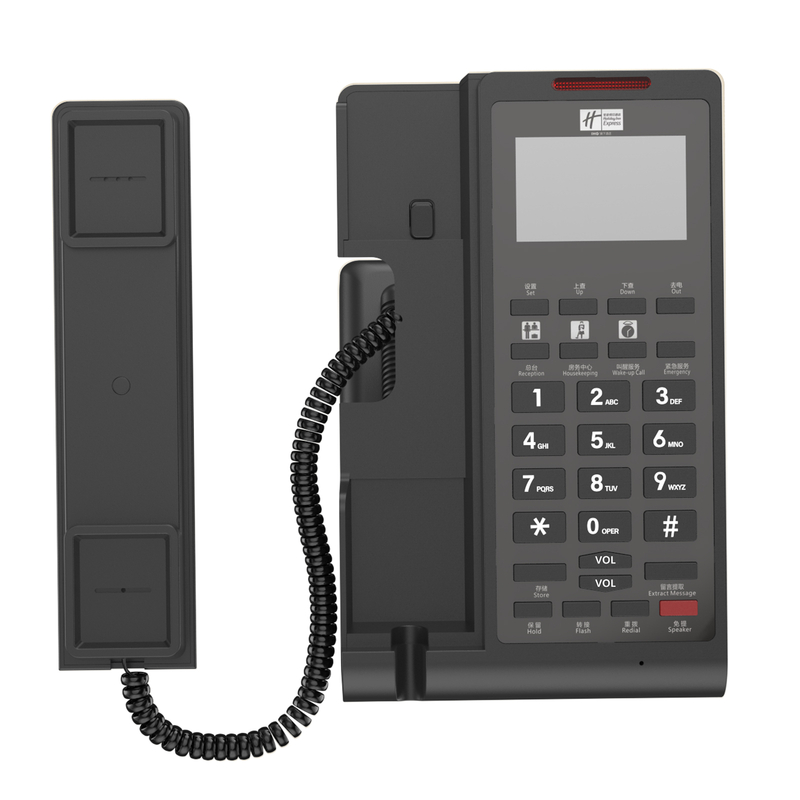
Hotel phones often have extra buttons called guest service keys. These keys provide quick access to important hotel services like the front desk, room service, or emergency help. Home phones usually don't have these specialized buttons.
Durability is another factor. Hotel phones get heavy use from many guests, so they need to be sturdy and reliable. Home phones, used by fewer people, don't require such rugged construction.
Hotel telephone systems come with features designed to improve guest convenience and hotel operations. Here are some key features:
● PBX Integration: Allows calls to be routed efficiently within the hotel and to external lines.
● Guest Service Keys: Programmable buttons for quick access to hotel services.
● VoIP Compatibility: Many modern hotel phones support Voice over Internet Protocol, enabling calls over the internet for better quality and cost savings.
● Speakerphone and Hands-Free Options: Guests can take calls without holding the handset, which is more hygienic and convenient.
● Battery Backup: Ensures phones work during power outages, crucial for emergencies.
● Customizable Faceplates: Hotels can brand phones with logos or information, adding a professional touch.
● USB Charging Ports: Guests can charge their devices directly from the phone.
● Multi-line Support: Allows guests to manage multiple calls, useful for business travelers.
Tip: When choosing hotel phones, prioritize models with robust PBX integration and guest service keys to streamline guest communication and enhance operational efficiency.
Hotel telephone systems mainly come in two types: analog and VoIP (Voice over Internet Protocol). Each has its own strengths and suits different hotel needs.
Analog Phones use traditional copper wiring to connect calls. They are simple, reliable, and often less expensive upfront. These phones work well in hotels with existing landline infrastructure and where internet connectivity might be limited or unstable. Analog phones provide consistent call quality and are easy to maintain. However, they lack some modern features and flexibility.
VoIP Phones operate over the internet, converting voice into digital signals. This technology offers advanced features like call forwarding, voicemail-to-email, and integration with hotel management systems. VoIP phones can reduce costs, especially for long-distance calls, since they use internet bandwidth instead of phone lines. They also allow for easier scalability and remote management. However, VoIP requires a strong, reliable internet connection and proper network security to avoid disruptions.
Choosing between analog and VoIP depends on factors like budget, existing infrastructure, and desired features. Some hotels prefer analog for simplicity and reliability, while others choose VoIP for its flexibility and cost savings.
Hybrid hotel telephone systems combine analog and VoIP technologies, offering the best of both worlds. These systems allow hotels to use their existing analog lines while gradually adding VoIP features.
Benefits of Hybrid Systems:
● Cost-Effective Transition: Hotels can upgrade parts of their system without replacing everything at once.
● Flexibility: Hybrid systems support both traditional landline and internet-based calls, adapting to different guest needs.
● Reliability: Analog lines can serve as backup during internet outages, ensuring continuous communication.
● Feature-Rich: Hotels can add VoIP capabilities like call analytics and integration with other hotel software without losing analog reliability.
● Scalability: Hybrid systems grow with the hotel, allowing easy addition of new lines or features.
For example, a hotel might keep analog phones in older wings and install VoIP phones in newly renovated areas. This approach minimizes disruption and spreads out investment costs.
Corded landline phones in hotels must seamlessly integrate with the hotel's PBX system. This integration allows calls to be routed efficiently between guest rooms, front desk, and various departments. It ensures guests can reach services quickly without confusion or delay.
Guest service keys are a vital feature. These programmable buttons provide one-touch access to popular hotel services like room service, housekeeping, or emergency assistance. For example, a guest can press a single button to connect to the front desk or security. This convenience enhances the guest experience by simplifying communication.
Speakerphone capability is essential in hotel phones. It lets guests answer calls without lifting the handset, which is more hygienic and convenient, especially when multitasking. Hands-free options also benefit guests who may feel uneasy using a shared handset.
Having a clear, loud speakerphone ensures guests hear conversations without straining. Some models include noise-cancelling microphones to improve call quality. These features contribute to a modern, guest-friendly environment.
Customizable faceplates allow hotels to showcase their brand right on the phone. This might include the hotel logo, contact numbers, or promotional messages. It's a subtle but effective way to reinforce brand identity and professionalism.
Faceplate customization also helps guests identify hotel-specific functions easily. For example, labeled buttons for services or emergency contacts add clarity. This personal touch can enhance guest comfort and trust.
Corded landline phones play a key role in making guests feel comfortable and cared for during their stay. They offer a reliable, easy-to-use communication channel for guests to reach hotel services instantly. Unlike mobile phones, these phones don’t rely on cellular signals, ensuring calls connect clearly every time.
Guests appreciate the simplicity of pressing a dedicated button to contact the front desk, housekeeping, or emergency services. This quick access reduces frustration and wait times, boosting overall satisfaction. For example, a guest needing immediate assistance can call security with one button press, providing peace of mind.
Moreover, corded phones are familiar to most guests, requiring no learning curve. Their consistent sound quality and durability make them a dependable choice for all guest demographics, including elderly visitors or those less comfortable with smartphones.
For hotel staff, corded landline phones streamline internal communication. Staff can quickly coordinate tasks like room cleaning, maintenance requests, or guest inquiries without delays caused by dropped calls or poor reception. This efficiency helps hotels run smoothly and respond faster to guest needs.
From a cost perspective, corded phones often require less maintenance than wireless systems. They don't depend on batteries or Wi-Fi networks, reducing ongoing expenses. Their simple installation and compatibility with existing PBX systems mean hotels avoid costly upgrades or complex setups.
Additionally, corded phones provide stable connectivity during power outages when paired with backup systems, ensuring uninterrupted communication. This reliability minimizes downtime and the risk of lost revenue from service disruptions.
Safety is paramount in hospitality. Corded landline phones are crucial in emergencies because they offer a direct, dependable line to security or emergency responders. Unlike mobile devices, corded phones are less prone to interference and signal loss.
Many local regulations require hotels to maintain landline phones in guest rooms for emergency use. Corded phones meet these standards by providing a fail-safe communication method during crises such as fires or medical emergencies.
Their integration with hotel PBX systems also allows for rapid call routing and monitoring, helping staff respond swiftly. For instance, a guest pressing an emergency key can alert the front desk and security simultaneously, enabling coordinated action.
Selecting the right hotel telephone system begins with understanding your hotel's unique needs. Consider the size of your property, the number of rooms, and the volume of daily calls. Larger hotels require systems that can handle multiple simultaneous calls and extensive internal routing. Smaller properties might opt for simpler setups but still need reliability and essential features.
Budget is another key factor. While advanced VoIP systems offer many features, they may require higher upfront investment and robust internet infrastructure. Analog systems often have lower initial costs and simpler maintenance but lack scalability and some modern conveniences. Hybrid solutions provide a middle ground, allowing phased upgrades without large immediate expenses
Analyze ongoing costs, including maintenance, support, and potential system upgrades. Some providers offer subscription-based models, shifting expenses to operational budgets, which can be easier to manage. Always weigh cost against the benefits of improved guest experience and operational efficiency.
A telephone system that integrates smoothly with your hotel management system (HMS) or property management system (PMS) can transform operations. Integration enables real-time updates for room status, billing, and guest requests, reducing manual errors and delays.
For example, when a guest makes a call for room service, the request can automatically appear in the HMS, alerting staff promptly. Integration also allows easier billing of phone calls, wake-up calls, or other services directly to the guest's account.
Ensure the system supports standard protocols and APIs to communicate with your existing software. Compatibility reduces installation complexity and avoids costly system overhauls. Ask vendors about their integration capabilities, case studies, or references from hotels using similar setups.
Even the best hotel telephone system needs ongoing support and maintenance. Choose providers offering 24/7 customer service, ensuring help is available whenever issues arise. Hotels operate around the clock, so downtime can severely impact guest satisfaction and safety
Regular maintenance prevents unexpected failures. This includes software updates, hardware checks, and network monitoring. Some providers offer remote diagnostics and troubleshooting, speeding up problem resolution without waiting for onsite visits.
Consider service agreements that include fast response times and replacement parts availability. Training your staff on basic troubleshooting can also minimize disruptions. A proactive approach to support keeps your communication system running smoothly and guests happy.
Artificial Intelligence (AI) and the Internet of Things (IoT) are transforming hotel telephone systems beyond traditional calling. AI-powered systems can automate routine tasks like call routing, wake-up calls, and guest requests, freeing staff to focus on personalized service. For example, AI can analyze call patterns to predict peak times and optimize staffing or detect unusual call activity for security.
IoT integration means phones connect with other smart devices in the hotel room. Guests might use the phone to control lighting, temperature, or entertainment systems. This connected environment enhances convenience and creates a seamless guest experience. For instance, a guest can use the phone to adjust room settings or request housekeeping without needing separate devices.
Together, AI and IoT enable smarter, more responsive communication systems. They also support multilingual voice assistants, making it easier for international guests to navigate services. Hotels adopting these technologies can improve operational efficiency and offer modern amenities that appeal to tech-savvy travelers.
Hotel telephone systems must scale easily as properties grow or update. Cloud-based solutions and virtual PBX systems offer flexible scalability, allowing hotels to add or remove lines and features without major hardware investments. This adaptability is crucial for hotels expanding their room count or upgrading facilities.
Integration with emerging technologies like mobile apps, CRM platforms, and property management systems (PMS) is increasingly important. Unified communication platforms combine voice, video, and messaging, enabling staff to connect across devices and locations effortlessly. For example, a staff member can receive guest calls on a smartphone or tablet, ensuring no request goes unanswered.
Additionally, integration with analytics tools helps hotels monitor call quality, guest satisfaction, and staff performance. These insights drive continuous improvement and support data-driven decision-making.
As technology evolves, hotel telephone systems will continue to merge with broader digital ecosystems. This trend ensures communication remains efficient, guest-focused, and aligned with the latest innovations.
Corded landline phones enhance guest satisfaction and operational efficiency in hotels, offering reliable communication and essential features. Hotel telephone systems, including analog, VoIP, and hybrid solutions, cater to diverse needs, balancing cost and functionality. Shenzhen Sachikoo Yongfa Technology provides advanced hotel communication systems that integrate with existing infrastructure, ensuring seamless guest experiences and efficient operations. Their products offer innovative features, such as AI and IoT integration, supporting modern hotel environments and future-proofing communication infrastructure.
A: A Hotel Telephone Corded Landline Phone is a specialized phone used in hotels, designed to integrate with a PBX system, featuring guest service keys for quick access to hotel services.
A: It provides reliable communication, allowing guests to easily reach services like room service or emergency assistance with dedicated buttons, improving convenience and satisfaction.
A: Corded phones offer stable connectivity, especially during power outages, and comply with safety regulations, ensuring reliable communication in emergencies.
A: Corded phones typically have lower upfront costs and simpler maintenance compared to wireless systems, providing cost-effective communication solutions for hotels.
A: They can integrate with hotel management systems to streamline operations, allowing real-time updates for guest requests and billing, enhancing efficiency.