E-mail: sachikoo_sz@yeah.net
Telephone: +86-13118819569

Views: 0 Author: Site Editor Publish Time: 2026-09-23 Origin: Site


Did you know a faulty room kettle can instantly ruin a guest's review of your property? Procuring appliances for a hotel requires a total mindset shift. You are no longer buying for residential home use. Procurement managers carry the heavy responsibility of balancing guest safety, operational costs, and strict commercial compliance.
In this comprehensive guide, we unpack the crucial appliance specifications you need to know. By understanding these technical nuances, you can make smarter, risk-free bulk purchasing decisions. The goal? To elevate your property's standards while protecting your bottom line.
Prioritize Safety First: An insulated exterior paired with fail-safe shut-off functions is non-negotiable. It protects guests from burns and hotel property from fire hazards.
Material Matters: Always opt for premium food-grade stainless steel. This prevents rust, eliminates plastic odors, and ensures long-term operational durability.
Elevate the Experience: Purchasing an integrated welcome tray bundle streamlines your SKU planning. It also significantly enhances room aesthetics.
Supplier Vetting is Crucial: Sourcing from a certified manufacturer ensures consistent quality control. It guarantees reliable commercial warranties and smooth bulk order fulfillment.
Recent market analyses reveal a pronounced shift in how hotel chains approach in-room amenities. Driven by corporate ESG (Environmental, Social, and Governance) targets, procurement officers are actively phasing out bulky, high-wattage consumer models. Instead, the focus has pivoted toward sustainable, low-wattage units that reduce a property's peak electrical load without sacrificing boiling speed.
Furthermore, minimalist, integrated beverage stations are rapidly replacing cluttered countertops. Modern hotels want a seamless look. This evolution means today's procurement is as much about energy management and aesthetic integration as it is about baseline guest comfort.
When consumers purchase a kettle for their kitchen, they look at brand aesthetics, boiling speed, and retail price. In contrast, when you source equipment for hundreds of guest rooms, the criteria change completely. The evaluation must focus heavily on risk mitigation, operational longevity, and strict regulatory compliance.
Hotel appliances experience a significantly higher frequency of use—and often abuse—compared to domestic models. Guests from diverse backgrounds will operate the equipment. Therefore, the design must be entirely foolproof. There is no room for complex digital interfaces or fragile components. Commercial environments are bound by rigorous fire safety codes. A standard consumer kettle simply lacks the robust internal wiring and fail-safes required by commercial insurance policies.
| Evaluation Metric | B2C (Domestic) Kettles | B2B (Hospitality) Kettles |
|---|---|---|
| Usage Frequency | 1-2 times daily | 3-8 times daily, often continuously |
| Safety Certifications | Basic regional standards | Strict commercial CE, RoHS, CB, UL |
| Design Priority | Complex features, digital screens | Foolproof operation, extreme durability |
| Liability Risk | Low (Personal use) | High (Guest injury, property fire) |
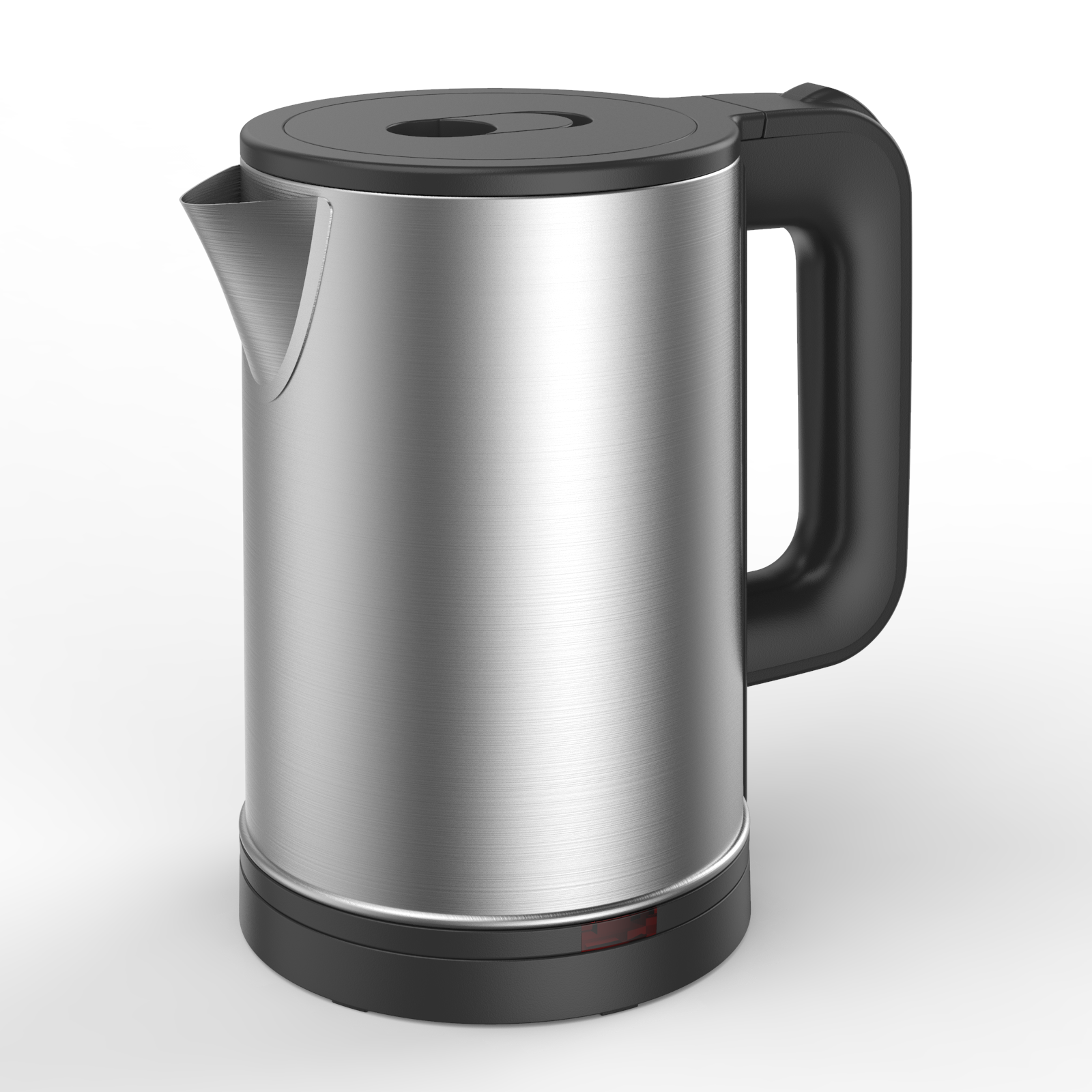
The inner tank of a kettle serves as the foundation of its safety and performance. Because this component remains in direct, constant contact with boiling water, the material composition directly impacts both guest health and the appliance's total lifespan.
In the hospitality industry, a 304 stainless steel kettle has become the absolute baseline standard for quality. Imagine a guest brewing their morning Earl Grey. Any hint of a chemical or plastic odor instantly shatters the premium illusion of your room. Unlike cheap plastic variants that degrade over time and leach microplastics, 304 food-grade stainless steel remains completely inert at high temperatures. This ensures the water remains pure.
From an engineering standpoint, you must pay close attention to the manufacturing technique. The most reliable commercial units feature a seamless, unibody inner tank formed through a deep-drawing stamping process. Older or cheaper models often rely on a welded seam at the bottom. Over time, the thermal expansion and contraction caused by boiling water weakens these welds. This inevitably leads to microscopic leaks. A seamless design eliminates these structural weak points entirely.
Guest safety is the paramount concern for any hotel operator. A severe burn incident can lead to substantial liability claims and lasting damage to the brand's reputation. Consequently, managing the exterior temperature of in-room appliances is a critical procurement specification.
Traditional single-wall metal kettles become dangerously hot. When the water inside reaches 100°C (212°F), the metal body hits the same temperature. A groggy traveler reaching for their morning coffee shouldn't result in a medical emergency. To actively mitigate this risk, buyers must specify an anti-scald hotel kettle for their properties.
These specialized units utilize advanced double-wall insulation technology. The construction typically consists of a food-grade stainless steel inner tank surrounded by a heat-resistant outer shell (often high-grade PP plastic or secondary metal), separated by a hollow air layer. This thermodynamic design traps the heat inside. The exterior surface remains safe to handle while simultaneously keeping the water hotter for longer periods.
Fire safety compliance is heavily scrutinized during routine hotel audits. The most common cause of appliance-related accidents is "dry boiling"—when the unit is turned on without sufficient water. This causes the heating element to overheat rapidly.
Therefore, an automatic shut-off kettle is a mandatory requirement. This system relies on a specialized internal bimetallic thermostat. It detects when the water has reached a rolling boil and instantly severs the electrical circuit.
Furthermore, commercial models must feature secondary boil-dry protection. If a guest mistakenly activates an empty kettle, this fail-safe mechanism detects the abnormal temperature spike and cuts the power before any damage occurs. When reviewing specifications, always inquire about the thermostat's cycle rating. Industry-leading controllers are tested for over 10,000 cycles, drastically reducing the defect rate of your bulk orders.
Sizing the appliance correctly is a strategic step. It impacts both energy consumption and guest convenience. A frequent mistake in hotel procurement is ordering standard 1.7-liter kettles originally designed for family kitchens.
Based on empirical usage data, the optimal capacity for a standard guest room is 1.0 liter. Guests rarely need more than two cups of hot water at a time. A 1L capacity prevents overfilling, thereby reducing unnecessary water waste. Additionally, a smaller volume of water reaches the boiling point significantly faster.
Wattage is equally important. Selecting a wattage between 1000W and 1350W ensures a rapid boil without overloading the room's electrical circuit. This is especially critical during peak morning hours when guests are simultaneously using hair dryers and HVAC systems.
The in-room beverage station is often one of the very first touchpoints a guest interacts with upon arrival. A disorganized collection of loose tea bags, sugar packets, and mismatched cups makes a room feel chaotic.
To elegantly solve this, procurement strategies have shifted toward purchasing an electric kettle with tray as a comprehensive bundle. This approach offers massive operational advantages.
Specifically, it streamlines SKU (Stock Keeping Unit) planning. Instead of sourcing individual components from three different vendors, managers can buy an integrated system from a single source. Moreover, the structural design of a welcome tray actively protects hotel assets. Integrated ABS or melamine trays capture spills and condensation, preventing dark coffee stains from permanently damaging expensive wooden furniture.
Labor remains one of the highest operating expenses in the hospitality sector. Housekeeping staff often have less than 30 minutes to completely turn over a room. Every second counts. Consequently, in-room appliances must be designed for rapid, effortless maintenance.
When selecting a bulk order, look at the interior geometry. Specify models with wide-mouth openings—ideally featuring a lid that opens to a wide angle. This allows staff to easily reach inside the tank with a cloth to wipe down the interior in mere seconds.
Equally important is the requirement for concealed heating elements. Older designs with exposed heating coils trap mineral scale and are incredibly time-consuming to descale. A concealed heating element, housed beneath a flat stainless steel floor, prevents scale buildup. It allows staff to sanitize the unit with a single, swift wiping motion.
Identifying the perfect product on paper is only half the battle. Securing a reliable supply chain is equally critical. Vetting a B2B manufacturer involves rigorous due diligence to mitigate risks associated with delayed shipments or inconsistent quality.
The foundation of a reliable partnership lies in verifiable certifications. A legitimate hotel kettle supplier must provide documentation proving compliance with both international manufacturing standards and regional electrical safety regulations (such as CE, RoHS, or CB).
Do not merely ask if a product is certified; verify the factory's operational standards. Look for ISO9001 certification. A robust manufacturer will have a strict three-tier inspection system: Incoming Quality Control (IQC) for raw materials, In-Process Quality Control (IPQC) during assembly, and Final Quality Control (FQC) before packaging. Finally, always negotiate an agreement for spare parts. Reputable manufacturers typically provide 1% to 2% of easily replaceable components free of charge with the bulk shipment.
The industry standard for commercial guest rooms is typically 1.0 liter. This specific capacity provides enough water for two to three standard cups of coffee or tea, perfectly matching average room occupancy. Smaller capacities prevent guests from overfilling the appliance, which significantly reduces water waste and lowers energy consumption per boil.
Selecting 304 stainless steel is fundamentally about health compliance and durability. Food-grade stainless steel offers superior resistance to oxidation and corrosion, which is vital for appliances constantly exposed to hard water. Unlike plastic models, stainless steel does not degrade over time, nor does it leach microplastics or impart an unpleasant chemical taste to boiling water.
Yes, reputable B2B manufacturers specialize in providing highly customizable solutions. Procuring a bundle allows procurement managers to dictate the exact material, color, and configuration of the setup. Trays can be manufactured from durable ABS plastic or elegant melamine to align with the room's decor. Custom branding, such as laser-engraved logos, is also widely available.
An anti-scald model is engineered with double-wall insulation technology. It typically consists of a food-grade inner tank surrounded by an outer layer of heat-resistant material, separated by an air gap. This thermodynamic design traps the heat inside. Even when the water reaches a rolling boil at 100°C (212°F), the exterior shell remains cool to the touch, minimizing liability risks.
Strict adherence to international safety standards is non-negotiable. Ensure your appliance carries CE and RoHS certifications for the European market, or UL/ETL marks for North America. The CB Scheme certification is also highly valuable, indicating the product has passed rigorous international electrotechnical testing.
In a standard hospitality environment, a high-quality commercial kettle should last between 3 to 5 years. The actual lifespan heavily depends on local water hardness and the quality of the internal thermostat. Units equipped with premium, cycle-tested controllers and seamless stainless steel tanks consistently outlast cheaper alternatives.
The most efficient method is using a mild, food-safe citric acid solution. Housekeeping staff can add a small amount of citric acid powder with water, bring it to a boil, and let it sit for a few minutes. If the kettle features a seamless stainless steel interior and a concealed heating element, a simple wipe with a microfiber cloth will instantly remove the loosened mineral scale.
Selecting the right equipment doesn't just protect your property—it actively enhances the guest experience. If you are looking for appliances that perfectly balance 1000W-1350W energy efficiency, 304 stainless steel durability, and elegant welcome tray integration, you need a trusted manufacturing partner. For tailored B2B hospitality solutions, explore the high-quality, fully customizable options at Sachikoo to find the exact specifications your project demands.