E-mail: sachikoo_sz@yeah.net
Telephone: +86-13118819569

Views: 0 Author: Site Editor Publish Time: 2026-08-08 Origin: Site


Reliable telephone communication remains important in hotels, even as guests increasingly use mobile phones and messaging applications.
The front desk still needs to receive guest requests. Security teams need dependable communication between different areas. Housekeeping and maintenance departments may need dedicated telephone access. Remote villas, temporary reception areas, guard rooms, and buildings without complete telephone wiring may also require an alternative to a conventional landline.
In these situations, a Fixed Wireless Phone can provide telephone service through a cellular network and SIM card rather than a traditional copper telephone line. However, its performance depends on the quality and stability of the mobile signal at the actual installation location.
A phone that works well near the hotel entrance may perform differently in a basement office, an interior guest room, a concrete service corridor, or a separate resort villa. Hotels should therefore verify signal strength before purchasing and installing multiple units.
Test signal quality at the exact location where each phone will be installed.
Do not rely only on the number of signal bars displayed on a mobile phone.
Check reception at different times because hotel occupancy and network traffic can affect performance.
Pay particular attention to basements, elevators, service corridors, interior rooms, and buildings with reinforced concrete.
Test the selected SIM card and the actual fixed wireless telephone before bulk installation.
Choose a phone that supports clear audio, stable network access, suitable volume control, and simple hotel staff operation.
In a hotel, a telephone is not simply an office device. It supports guest service and daily property operations.
A weak or unstable connection can cause:
Interrupted calls between guests and hotel staff
Delayed communication with security or maintenance teams
Poor voice clarity at the reception desk
Missed calls in remote resort buildings
Difficulty contacting external service providers
Unreliable backup communication during a landline interruption
These problems may affect both the guest experience and staff efficiency.
For example, a fixed wireless phone installed at a temporary reception counter may work correctly during initial testing when the lobby is empty. Its performance may change when the hotel is busy, doors are closed, electronic equipment is operating, and many guests are using the same cellular network.
Signal verification should therefore reflect real hotel operating conditions rather than a single test made near a window.
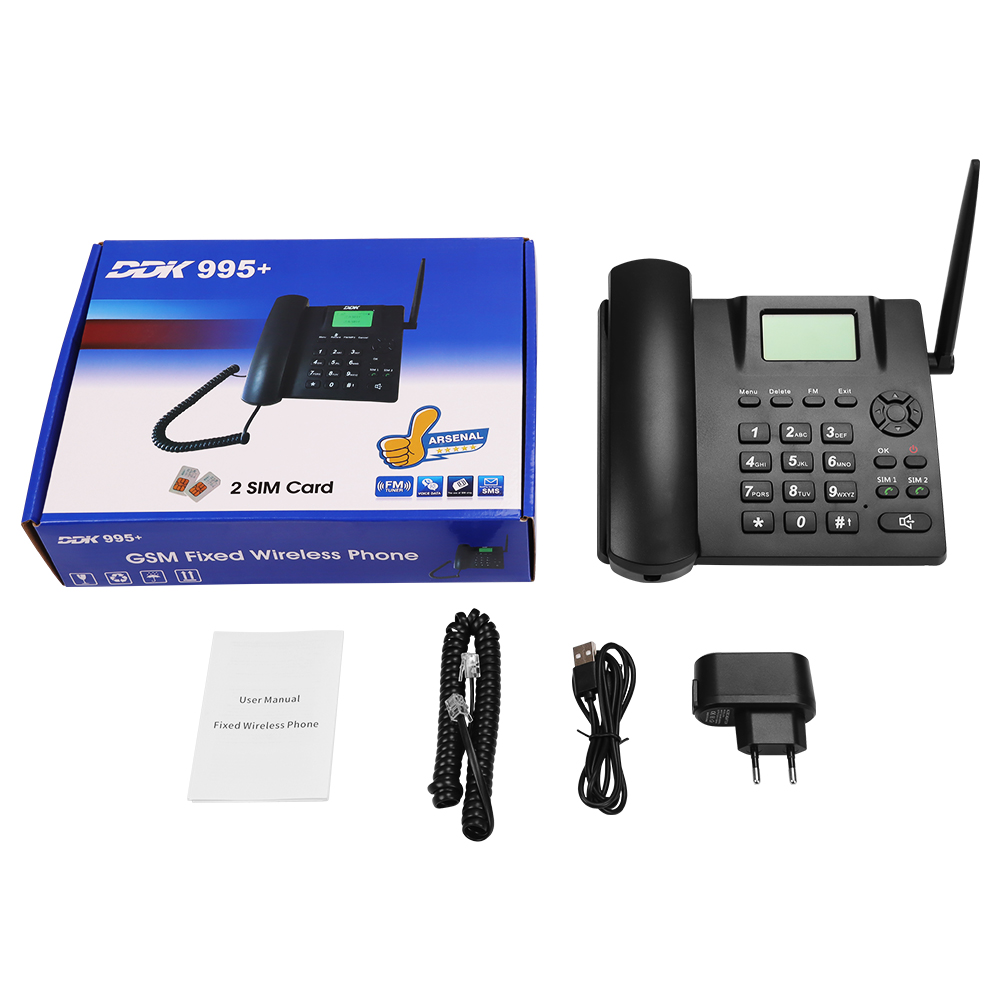
A Fixed Wireless Phone is not necessarily a replacement for every standard guest room telephone. Many hotels still use PBX-compatible hotel telephones in guest rooms because they provide direct access to reception, housekeeping, room service, and other internal departments.
Fixed wireless models are more suitable when conventional telephone cabling is unavailable, difficult to install, or needed as a backup.
The front desk is one of the most important communication points in a hotel. If the main PBX line or wired telephone service is interrupted, a fixed wireless phone can provide an additional external calling channel.
Before installation, the hotel should test:
Signal strength behind the actual front desk
Voice quality during busy check-in periods
Call stability when nearby computers and equipment are operating
The performance of different mobile carriers
Battery or backup power requirements
Large resorts may include detached villas, restaurants, spas, gatehouses, activity centers, and maintenance buildings. Installing wired telephone lines between these locations may require additional construction.
A SIM-based telephone can provide a practical communication option where cellular coverage is stable. Each building should be tested separately because trees, terrain, walls, roofs, and distance from the nearest cellular tower may affect reception.
Security staff may need a telephone in entrance gates, parking areas, loading zones, or monitoring rooms. Some of these locations are positioned inside concrete structures or below ground, where cellular coverage may be weaker.
Signal testing should include both incoming and outgoing calls. A phone that can display a network connection may still have unstable voice quality during a longer call.
Hotels undergoing renovation may relocate their front desk or guest service counter. Temporary event spaces, exhibitions, seasonal facilities, and construction offices may also require telephone access without permanent wiring.
A fixed wireless telephone can be moved more easily than a traditional wired line, but the new location must be tested again after each relocation.
Laundry rooms, storage areas, staff offices, kitchens, engineering rooms, and housekeeping stations may not always have convenient telephone wiring.
When these departments need external communication, a fixed wireless model may be considered. Hotels should check whether machinery, thick walls, metal shelving, electrical panels, or basement construction interfere with the signal.
Signal bars provide a quick visual indication, but they are not a standardized engineering measurement.
Different devices may display the same number of bars even when their actual signal conditions are different. One phone may show three bars and maintain a clear call, while another device in the same position may experience interruptions.
Hotels should use signal bars only as an initial reference.
A more complete verification process considers:
Received signal strength
Signal quality
Background interference
Network stability
Call clarity
Call connection time
Performance during longer conversations
For hotel procurement, the final decision should be based on an actual calling test using the intended telephone and mobile network.
Technical teams may use several network indicators when evaluating a fixed wireless installation.
RSSI refers to the total radio signal power received by the device. It includes the cellular signal as well as noise and interference.
It can provide a general indication of reception, but it should not be used alone to judge call quality.
RSRP measures the strength of the cellular network reference signal received by the device.
It is commonly used when evaluating 4G LTE coverage and can provide a more specific view of whether the selected network reaches the installation area.
SINR compares the useful signal with interference and background noise.
A phone may detect a strong signal but still produce poor voice quality if interference is high. This is why hotels should check both signal strength and actual call performance.
Hotel purchasing staff do not necessarily need to analyze every radio-frequency parameter themselves. However, installers or IT personnel should record available signal readings when testing difficult locations or planning a larger deployment.
A hotel signal survey should focus on the planned telephone locations rather than only on general building coverage.
Prepare a floor plan showing where each fixed wireless telephone may be installed.
Possible locations include:
Front desk
Concierge counter
Security office
Guardhouse
Engineering room
Housekeeping station
Restaurant office
Spa reception
Detached villa
Basement service area
Temporary event counter
Testing should be completed at the desk, wall, shelf, or counter where the telephone will actually remain.
Cellular coverage varies between network providers. One carrier may provide strong coverage in the hotel lobby but weak reception in a separate villa building.
Where possible, test SIM cards from more than one local carrier. Compare:
Call connection success
Voice clarity
Signal stability
Indoor coverage
Performance in remote buildings
Performance during busy periods
Dual-SIM capability may also be useful where hotels require access to more than one mobile network.
A smartphone can provide an initial indication of cellular coverage.
Place the mobile phone at the planned installation location and make several calls. Walk around the immediate area and note whether reception improves near windows, doors, exterior walls, or higher surfaces.
This test is useful for identifying obvious dead zones, but it should not replace testing with the final fixed wireless device. Antenna design and network support can differ between devices.
Before ordering a large quantity, install a sample unit at the hotel.
Insert the intended SIM card and test:
Incoming calls
Outgoing calls
Voice clarity
Ring volume
Handset volume
Caller ID display
Call duration
Signal stability
Operation after restarting
Performance after moving the unit
The phone should be tested in each type of hotel environment rather than only in the purchasing office.
Hotel communication conditions can change throughout the day.
Test during:
Morning check-out
Afternoon room preparation
Evening check-in
Busy restaurant periods
Events or conferences
High-occupancy weekends
A cellular network may perform well during quiet hours but become congested when guest activity increases.
Create a simple testing table for each proposed location.
| Hotel Location | Carrier | Signal Status | Call Clarity | Call Stability | Installation Decision |
|---|---|---|---|---|---|
| Front desk | Carrier A | Stable | Clear | Stable | Approved |
| Basement office | Carrier A | Weak | Intermittent | Unstable | Change carrier or location |
| Security gate | Carrier B | Stable | Clear | Stable | Approved |
| Resort villa | Carrier B | Moderate | Clear | Requires retest | Test external antenna |
This record helps the hotel compare network providers and prevents different departments from repeating the same tests.
Hotel buildings contain many materials and structures that affect cellular reception.
Concrete walls and floors can significantly reduce indoor signal penetration. This is common in stairwells, basements, engineering rooms, service corridors, and underground parking areas.
Metal wall panels, elevator shafts, equipment cabinets, kitchen facilities, and large storage racks can reflect or block wireless signals.
Modern hotels often use energy-efficient or tinted glass. These materials may reduce the cellular signal entering guest rooms, restaurants, lounges, and conference areas.
A telephone placed beside a window does not always receive a stronger signal if the glass has a signal-blocking coating.
Rooms positioned in the center of a large floor may receive weaker signals than rooms near exterior walls. Bathrooms, wardrobes, corridor walls, and fire-resistant partitions may create additional barriers.
Basements often have limited access to outdoor cellular signals. If a fixed wireless telephone is required in a basement office or security room, the hotel may need to test a different carrier, relocate the phone, or consider an external antenna solution.
Routers, electrical cabinets, large displays, kitchen equipment, and other electronic devices may contribute to interference. The telephone should not be placed directly beside high-power equipment unless testing confirms stable performance.
If testing identifies weak or unstable reception, the hotel should not immediately assume that the telephone is defective.
Several adjustments can be tested.
Moving the device a short distance may improve reception. Test positions:
Closer to an exterior wall
Near a doorway
On a higher surface
Away from metal equipment
Away from an elevator shaft
Outside an enclosed cabinet
The final position should remain convenient for hotel staff and should not create exposed or untidy cables.
Coverage can differ substantially between carriers. Replacing the SIM card may be more practical than changing the entire telephone installation.
Some fixed wireless phones support an external antenna. This may help in detached buildings, guard rooms, or areas where the main unit must remain inside a weak-signal location.
The hotel should confirm antenna compatibility before purchasing the telephone.
The phone and SIM card must support the cellular network available in the hotel’s country or region.
Hotels should confirm:
Supported network generation
Frequency bands
SIM card compatibility
Local carrier requirements
Voice service availability
Whether the carrier supports the required calling technology
A model should not be selected only because it works in the supplier’s test location.
Where cellular coverage remains unreliable, a fixed wireless phone may not be the correct solution for that specific location.
The hotel may need to use:
A wired PBX telephone
An IP hotel telephone
An internal intercom
A network-based communication system
Professionally designed cellular coverage equipment
The communication method should match the building infrastructure and operational requirements.
Signal strength is only one part of fixed wireless telephone selection.
Hotel buyers should also evaluate the following features.
Front desk and service areas can be noisy. The handset and ring volume should be suitable for the intended location.
Hotel staff may change between shifts. The phone should have an intuitive keypad, readable display, and straightforward calling functions.
The telephone should remain stable when the handset is lifted. This is especially important at busy front desks and security counters.
Caller identification can help staff recognize incoming calls and manage communication more efficiently.
Confirm whether the device supports one or two SIM cards and whether it is compatible with local carrier frequencies.
Hotel telephones are used frequently. A durable ABS housing can support regular operation and routine cleaning.
Moisture-resistant construction may be useful in resort environments, spa reception areas, guardhouses, and locations exposed to humid conditions.
Hotels should confirm how the phone operates during a power interruption. Depending on the model, a battery or alternative backup arrangement may be required.
For large hotel projects, buyers may require customized logos, packaging, color selection, or operating instructions. These requirements should be confirmed before production.
Sachikoo’s fixed wireless telephone range includes SIM-based models with features such as cordless operation, dual-SIM support, adjustable handset volume, caller ID functions, moisture-resistant construction, and hotel application options. ed Wireless Phones Fit into a Hotel Telephone Plan?
Hotels usually require more than one type of telephone.
Standard guest rooms may use dedicated hotel telephones connected to the property’s PBX system. These models can include programmable service keys, message indicators, volume control, wall-mounted options, and direct access to hotel departments. s phones can complement this system in locations where:
A telephone line is temporarily unavailable
The building is separate from the main hotel
The property needs an external backup line
Permanent cabling is impractical
A temporary reception or service point is required
Staff need a simple SIM-based desktop phone
The hotel should therefore plan fixed wireless phones as part of a broader communication system rather than purchasing them as isolated devices.
Before approving a fixed wireless telephone installation, confirm the following:
The installation location has been tested.
The actual phone and SIM card have been used for the test.
Incoming and outgoing calls are clear.
Reception remains stable during busy hotel periods.
The selected carrier covers all required hotel areas.
The telephone supports the local network bands.
The ring and handset volume suit the installation environment.
The phone is positioned away from major signal obstructions.
Power and backup requirements have been reviewed.
Staff can operate the device without additional training.
The test results have been recorded.
A sample unit has been approved before bulk ordering.
Signal verification for a Fixed Wireless Phone should be based on the real hotel environment.
Reception near the hotel entrance does not guarantee stable communication in a basement office, resort villa, security room, housekeeping area, or temporary front desk. Hotels should test the exact installation location, compare mobile carriers, make real calls with the selected device, and repeat testing during different operating periods.
Fixed wireless phones are most valuable when they solve a specific hotel communication need. They can provide backup communication, support detached buildings, reduce dependence on permanent cabling, and serve temporary guest service areas.
Sachikoo supplies hotel communication equipment and other hotel room appliances for hospitality projects. Buyers can discuss network compatibility, telephone functions, customization, and project quantities before selecting a model for their property.