E-mail: sachikoo_sz@yeah.net
Telephone: +86-13118819569

Views: 0 Author: Site Editor Publish Time: 2026-08-14 Origin: Site


Hospitality operators face unpredictable guest behavior daily. Guests operate empty appliances, boil unauthorized items, and ignore minimum fill lines. When guests misuse a Hotel Electric Kettle, consequences escalate rapidly from minor equipment damage to severe fire hazards and tripped electrical breakers. Deploying unverified appliances in commercial environments introduces unacceptable financial and safety vulnerabilities. Rapid equipment degradation caused by dry-boiling or low-water operation is a constant threat. Not all safety claims printed on packaging hold up under the rigorous demands of a commercial property. Understanding the exact testing protocols behind boil-dry protection and the integration of industry-standard thermostat controllers is essential for evaluating and procuring reliable appliances. Procurement teams must look beyond basic functionality to ensure every unit placed in a guest room features verified, mechanical fail-safes designed to withstand extreme thermal stress without compromising property safety.
Boil-dry protection relies on a bimetallic disk mechanism (often housed within industry-standard controllers like Strix) that utilizes thermal hysteresis to sever the electrical connection when temperatures exceed normal liquid-boiling parameters.
Commercial testing protocols require hundreds of simulated dry-boil and low-water cycles to ensure the automatic shut off kettle mechanism does not degrade over time.
Procurement evaluation must weigh material integrity—such as the thermal resilience of a stainless steel hotel kettle—against performance metrics like rapid boil times and integration with a kettle tray set.
Requesting verified testing documentation (UL, CE, or equivalent hospitality-grade certifications) and establishing safe cleaning SOPs are non-negotiable steps in the decision-stage journey.
To understand the necessity of robust safety mechanisms, we must first examine the physics of a dry-boil and low-water scenario. When an appliance operates normally, the water inside absorbs the thermal energy generated by the heating element. The water converts that energy into steam at 100°C (212°F). The liquid acts as a highly effective heat sink. However, when there is zero water, or a volume significantly below the minimum fill line, that thermal energy has nowhere to dissipate.
The heating element experiences a rapid, uncontrolled temperature spike. Temperatures often exceed 300°C (572°F) within seconds. Without mechanical intervention, this extreme heat melts plastic enclosures, warps metal bases, and scorches internal wiring. It will ultimately ignite surrounding materials. We see this frequently in field inspections where consumer-grade units have literally fused to the desk surface after a dry-boil event.
The primary defense against this thermal runaway is a highly engineered component known as a bimetallic disk. This disk consists of two distinct metals bonded together. Manufacturers typically use a combination of steel and copper, or steel and brass. Because these metals possess different coefficients of thermal expansion, they react differently to heat. As the temperature rises, one metal expands faster than the other. This unequal expansion causes the disk to physically bend or dome.
This mechanism relies on the principle of thermal hysteresis. The disk is calibrated to remain stable during normal water-boiling temperatures. When the temperature spikes beyond the normal boiling point due to the absence of liquid, the disk reaches its critical actuation temperature. It snaps violently into a new shape. This action physically pushes against a switch that breaks the electrical circuit. This mechanical severing of the power supply is instantaneous. It prevents the heating element from reaching catastrophic temperatures.
The reliability of the bimetallic disk depends entirely on the housing and the precision engineering of the internal controller. Reputable commercial units rely on branded, high-quality internal controllers. Manufacturers like Strix or Otter dominate this space. These industry-standard controllers are globally recognized for their precise calibration and durability.
They securely house the bimetallic sensors. This ensures the mechanical snap-action is not hindered by internal friction, moisture ingress, or repeated use. Procurement teams must verify the presence of these specific controller brands. Generic or unbranded alternatives frequently fail to actuate at the correct temperature threshold. A failed actuation renders the boil-dry protection useless and leaves the property exposed to fire risks.
We must differentiate between standard steam-triggered auto shut-off and the secondary fail-safe of boil-dry protection. An automatic shut off kettle primarily relies on a steam tube. When water reaches a rolling boil, steam is forced down a channel to heat a separate bimetallic strip located near the base. This strip then trips the power switch. This system requires sufficient water to generate steam.
Boil-dry protection acts as the secondary, ultimate fail-safe. If a guest turns on an empty unit, no steam is generated. The standard auto shut-off will never engage. The boil-dry sensor sits directly against the heating element. It detects the abnormal conductive heat rather than steam. Together, these two independent systems provide comprehensive thermal regulation. They ensure the appliance powers down safely regardless of how much water is inside the reservoir.
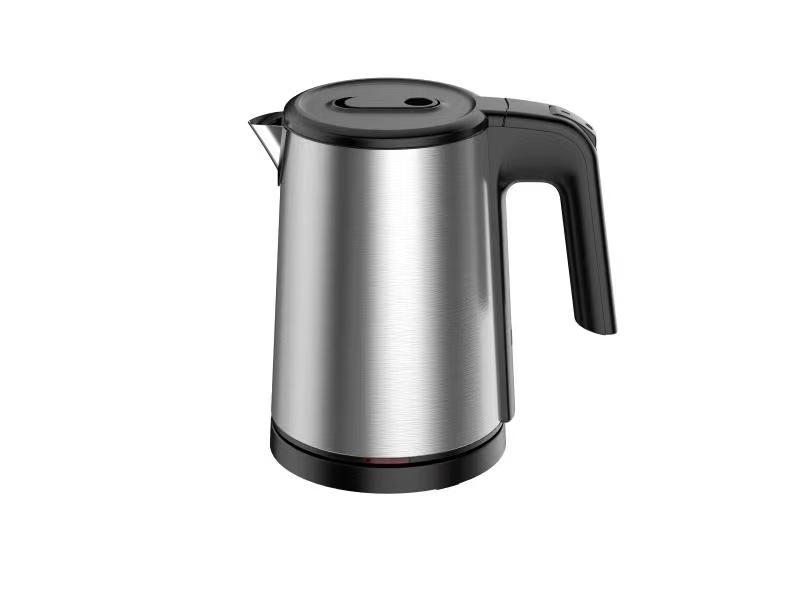
Validating the safety claims of hospitality appliances requires rigorous laboratory testing. Reputable vendors subject their products to exhaustive evaluation dimensions to ensure compliance with international safety standards. These tests push the mechanical and electrical components far beyond normal operational parameters. They simulate years of commercial abuse in a matter of weeks. The goal is to identify the exact failure point of the thermal sensors and ensure the fail-safes engage consistently without degradation.
The core of boil-dry testing involves extreme thermal stress and cycle testing. Engineers force the appliance to boil dry repeatedly. Commercial standards often require exceeding 500 consecutive cycles. During this process, the unit is powered on completely empty. The laboratory measures the exact response time. They verify that the bimetallic strip actuates and severs the power within seconds of the element crossing the critical temperature threshold.
This repetitive testing evaluates the fatigue limit of the bimetallic disk. Metals subjected to constant heating, snapping, and cooling experience metallurgical fatigue. They can lose their spring tension over time. A commercial-grade unit must demonstrate that even on the 500th dry-boil cycle, the disk snaps with the same force and speed as it did on the first cycle. This consistency prevents any dangerous heat accumulation.
Operating an appliance with a minuscule amount of water presents a unique hazard. It can delay the activation of the boil-dry sensor while still failing to generate enough steam for the primary auto shut-off. Low-water tests simulate operating the unit just below the minimum fill line. Engineers monitor the internal temperatures to ensure the sensor triggers before the exposed portions of the heating element overheat and compromise the structural integrity of the base.
Voltage stress tests are conducted across different electrical environments, typically 110V to 220V. Rapid-boil models draw significant amperage. Testing ensures that the high power draw does not cause electrical arcing. It also ensures the safety switch contacts do not fuse together during a dry-boil event. Fused contacts would permanently disable the protection mechanism.
Following the cycle testing, the appliances undergo a comprehensive post-test teardown. Engineers conduct a detailed component degradation analysis. They inspect the heating element for micro-fractures. They evaluate the wiring insulation for any signs of thermal brittleness. The plastic base components and internal housings are scrutinized for melting, warping, or discoloration.
Electrical safety is further verified through dielectric strength testing. This ensures the extreme heat has not compromised the insulation between the live electrical components and the exterior casing. Any sign of electrical arcing, compromised grounding, or structural failure during this teardown process results in an immediate failure of the commercial certification.
Procurement teams must demand proof of mandatory safety certifications. Standards such as UL 1082 and IEC 60335-2-15 mandate specific, non-negotiable boil-dry testing criteria for commercial hospitality use. These regulatory bodies require independent laboratory verification that the appliance will not pose a fire hazard or shock risk even under severe misuse conditions. A vendor's inability to provide these specific certification documents is a definitive red flag.
Commercial Kettle Safety Testing Protocols
| Test Category | Testing Methodology | Primary Objective | Pass/Fail Criteria |
|---|---|---|---|
| Cycle Testing | 500+ consecutive dry-boil activations. | Evaluate bimetallic disk fatigue limit. | Must shut off within specified seconds on every cycle without mechanical failure. |
| Low-Water Stress | Operation below the minimum fill line. | Ensure sensor triggers before element damage. | No structural warping or element burning before shut-off engages. |
| Voltage Stress | Testing across 110V-220V environments. | Prevent switch fusing under high amperage. | Contacts must cleanly break the circuit without electrical arcing. |
| Dielectric Strength | Post-test high voltage application. | Verify insulation integrity after extreme heat. | No electrical leakage or shock hazard detected on the exterior casing. |
When evaluating different models, procurement teams encounter various engineering approaches to managing the extreme heat generated during a dry-boil event. Some designs rely heavily on thick, heat-resistant base plates to absorb the initial thermal shock. Others utilize highly sensitive, rapid-response thermostats to cut power instantly. Understanding these solution categories allows operators to match the appliance's engineering with the specific risk profile of their property.
The material composition of the appliance body plays a critical role in overall safety and thermal management. A stainless steel hotel kettle offers superior thermal mass and heat dissipation capabilities. If a dry-boil event occurs, the 304-grade stainless steel safely absorbs and radiates the residual heat without compromising its structural integrity. Stainless steel eliminates the risk of toxic chemical leaching that occurs when plastics are subjected to high temperatures.
Lower-grade polycarbonate or plastic bodies present significant melting risks. Even if the boil-dry protection engages correctly, the residual heat from the element can warp or melt the plastic base. This ruins the appliance and potentially releases noxious fumes into the guest room. Commercial procurement should heavily favor metal constructions for their inherent thermal resilience.
Guest satisfaction demands fast performance. This leads many properties to seek out high-wattage, rapid-boil models. A common procurement standard is to reject models that take excessively long to boil. We typically look for boil times under 3 minutes for a standard 0.8L to 1L capacity. Balancing this performance with safety requires careful evaluation.
High-wattage elements heat up incredibly fast. In a dry-boil scenario, the temperature spikes much more aggressively. Procurement teams must ensure that the rapid-boil features do not outpace the reaction time of the boil-dry sensor. The internal thermostat must be precisely calibrated to handle the aggressive thermal curve of a high-wattage element. It must cut power before the element burns out or damages the surrounding housing.
The safety of the appliance extends beyond the unit itself to how it interacts with the surrounding furniture. Integration with a dedicated kettle tray set is a vital component of in-room safety. Even after the boil-dry protection successfully cuts the power, the base of the appliance remains exceptionally hot.
A properly engineered tray set manages this residual heat. It elevates the hot base away from wooden desks or composite countertops. Procurement must verify that the tray is manufactured from fire-retardant materials, such as high-grade melamine or treated ABS. This prevents secondary ignition or scorch marks if the appliance base overheats. The tray also serves to contain accidental spills, keeping water away from the electrical base and wall outlets.
Space is often at a premium in guest rooms, driving demand for smaller appliances. Operators must carefully assess whether a compact hotel kettle compromises the physical space needed for robust safety components. Smaller bases leave less room for adequate heat shielding between the heating element and the external casing.
High-quality compact models overcome this by utilizing advanced, miniaturized commercial controllers. They implement dense thermal insulation materials. Procurement teams must verify that space-saving designs retain full commercial-grade bimetallic sensors. They must pass the exact same rigorous thermal stress tests as their full-sized counterparts.
Deploying electrical appliances in unmonitored guest rooms introduces variables that cannot be entirely controlled by engineering alone. Staff cannot oversee how a guest interacts with the amenities. The implementation strategy must account for worst-case scenarios. We rely on a combination of mechanical fail-safes, clear user interfaces, and strict operational protocols to mitigate risks effectively.
Guest misuse frequently extends far beyond simply forgetting to add water. Extreme scenarios documented by hospitality operators include guests attempting to cook noodles, boil milk, or sanitize clothing inside the appliance. These unauthorized items coat the heating element. They insulate the thermal sensors and cause rapid overheating.
In these severe misuse cases, standard auto shut-off mechanisms fail completely. The foreign materials prevent normal steam generation. Boil-dry protection acts as the final line of defense against catastrophic failure. By detecting the abnormal conductive heat spike caused by the insulating debris, the bimetallic disk severs the power. This prevents a localized fire, even if the appliance itself is ultimately ruined by the guest's actions.
The most common cause of boil-dry sensor failure is improper cleaning by housekeeping staff. The internal controllers and bimetallic disks are highly sensitive to moisture ingress. Immersing the body, base, cord, or plug in water will short-circuit the thermostat. This leads to corrosion and permanent failure of the mechanical snap-action.
Properties must implement strict Standard Operating Procedures (SOPs) for safe cleaning. We recommend the following steps for housekeeping staff:
Unplug the unit from the wall outlet before initiating any cleaning procedures.
Empty any residual water from the reservoir into the sink.
Wipe down the exterior casing and the heating base with a slightly damp, non-abrasive cloth.
Apply approved descaling solutions to the interior only, ensuring no liquid spills over the electrical connectors.
Rinse the interior thoroughly with clean water, taking care to keep the exterior base completely dry.
Inspect the power cord for any fraying or exposed wires before returning the unit to the tray.
Proactive maintenance is required to ensure ongoing safety. Maintenance staff should conduct regular visual inspections of all in-room appliances. Clear parameters must be established for retirement. If an appliance shows visible signs of severe thermal stress, it must be removed from service immediately.
Check for scorch marks on the internal stainless steel base plate.
Inspect the heating element for warping or unusual discoloration.
Examine the plastic base plate for signs of melting or structural deformation.
Test the mechanical switch to ensure it moves freely without sticking.
Verify that the contact pins on the base are clean and free of corrosion.
The mechanical stress of an extreme dry-boil event compromises the future reliability of the bimetallic disk. Even if the unit still powers on, a thermally stressed appliance is unsafe for continued commercial deployment.
Procurement directors constantly navigate the tension between strict budget constraints and the necessity for uncompromising safety. The financial decision-making process must move beyond merely looking at the price tag of a single unit. Opting for cheaper, unverified appliances introduces hidden liabilities that rapidly erode initial savings. Investing in rigorously tested equipment provides measurable long-term stability.
Consumer-grade appliances flood the market with attractive upfront unit costs. They are engineered for light, domestic use. Their boil-dry mechanisms are rarely tested to withstand the high-frequency cycle demands of a commercial property. These cheaper units experience significantly higher failure rates. They require constant replacements. A single fire incident or electrical short caused by a failed consumer-grade sensor results in massive property damage and liability claims.
Investing in rigorously tested commercial units dramatically improves long-term value. A commercial unit built with Strix controllers and 304 stainless steel survives years of daily use. It withstands multiple dry-boil events without failing. The extended lifespan, reduced replacement frequency, and elimination of fire liabilities make the higher upfront cost a financially sound procurement strategy.
A critical step in the procurement process is scrutinizing vendor warranties and demanding accountability. Standard warranties often contain hidden clauses that void coverage in the event of dry-boiling or water damage. Procurement teams must review these documents specifically to ensure that the warranty covers commercial usage environments.
Before signing bulk purchase agreements, operators should demand transparent testing data from the supplier. Request the specific failure-rate statistics. Verify the exact brand of the internal controller. Ask for the laboratory reports detailing the cycle testing results. Vendors who cannot provide this level of transparency regarding their safety mechanisms should be immediately disqualified from the bidding process.
Audit your current inventory of in-room appliances to identify and remove any uncertified, consumer-grade models.
Request specific UL or IEC testing documentation and controller specifications from all prospective vendors during the bidding process.
Prioritize procurement of models explicitly engineered for the hospitality sector, focusing on stainless steel construction and branded internal controllers.
Update and enforce housekeeping SOPs to ensure staff never submerge electrical bases, protecting the integrity of the thermal sensors.
Implement a quarterly maintenance inspection schedule to identify and retire units showing signs of thermal stress or dry-boil damage.
A: An automatic shut-off is triggered by steam traveling down a tube when water reaches a rolling boil. Boil-dry protection is a secondary thermal sensor that triggers mechanically when the heating element overheats due to a complete lack of water, cutting the power to prevent a fire.
A: The heating element experiences a rapid temperature spike. Within seconds, the internal bimetallic disk reaches its critical actuation temperature, snapping out of shape to physically break the electrical circuit. This immediately cuts the power, protecting the heating element and preventing a fire hazard.
A: Yes. High-quality compact models utilize the exact same bimetallic technology and commercial-grade controllers as full-sized units. Because space is limited, they require highly precise engineering and dense thermal shielding to ensure the safety mechanisms function correctly without melting the smaller base.
A: Immersing the appliance base, cord, or plug in water can short-circuit the internal thermostat and permanently ruin the boil-dry sensor through corrosion. Appliances must always be unplugged and carefully wiped down with a damp cloth. They should never be submerged in liquids.
A: Under standard commercial usage, a high-quality unit typically lasts 3 to 5 years. An appliance must be replaced immediately, regardless of age, if maintenance staff detect visible signs of severe thermal damage, such as scorched internal bases or warped elements from extreme dry-boiling.
A: While the tray itself does not stop a dry-boil event, it plays a crucial role in managing residual heat. A commercial-grade tray made of fire-retardant, heat-resistant materials prevents the extremely hot base of the appliance from scorching wooden hotel furniture or causing secondary fires.