E-mail: sachikoo_sz@yeah.net
Telephone: +86-13118819569

Views: 0 Author: Site Editor Publish Time: 2026-08-11 Origin: Site


Thermoelectric cooling relies on the Peltier effect. This process inherently creates a cold internal heat sink where ambient moisture rapidly condenses. In commercial and hospitality environments, unmanaged condensation in a hotel mini fridge leads to water pooling, mold proliferation, damaged inventory, and increased housekeeping overhead. Effectively deploying thermoelectric units requires understanding the mechanical, environmental, and behavioral factors governing moisture control. You must account for ambient humidity, door seal integrity, and internal airflow dynamics. When moisture enters the cabinet, the system must either drain it or evaporate it efficiently. Failing to manage this water cycle results in hardware degradation and poor guest experiences. This guide breaks down how modern units mitigate condensation. We will examine the physical components that prevent excess moisture ingress and how to evaluate these systems during procurement to ensure long-term reliability.
Condensation is a feature of the physics, not a flaw: Semiconductor cooling continuously draws moisture out of the air; management relies on efficient drainage and evaporation rather than prevention.
Hardware integrity dictates moisture volume: Faulty door gaskets, misaligned hinges, and inadequate chassis insulation are the primary culprits for excessive water pooling.
Evaporation systems vary by tier: Commercial-grade units utilize integrated drip trays positioned over warm exterior heat sinks to passively evaporate condensate, whereas budget units require manual draining.
Technology trade-offs: When comparing a semiconductor mini fridge to an absorption mini fridge, facility managers must weigh the silent operation of thermoelectric units against their higher sensitivity to ambient humidity.
Establishing the baseline reality of how moisture enters and interacts with a thermoelectric cooling environment is the first step in managing it effectively. A semiconductor mini fridge operates using the Peltier effect. This solid-state technology transfers heat from one side of a ceramic module to the other using electrical current. The process creates a highly localized cold-side aluminum heat sink inside the cabinet and a corresponding hot-side heat sink on the exterior. As warm, moisture-laden room air circulates over the internal cold surface, the air temperature drops below its dew point. This physical reaction forces water vapor to condense into liquid droplets on the aluminum fins.
You will often notice frost or frozen water droplets forming on the internal back wall and side walls. This happens when ambient temperatures drop significantly or when internal airflow becomes restricted. Without adequate airflow to distribute the cold air, the localized heat sink operates below freezing. The condensed water droplets freeze upon contact. Thin or uneven cabinet insulation exacerbates this issue by allowing thermal bridging. When heat transfers through poorly insulated sections of the chassis, localized condensation forms directly on the interior plastic liner. This moisture bypasses the intended drainage systems entirely and pools at the bottom of the compartment.
Environmental variables play a massive role in how much moisture accumulates. The ambient room humidity directly dictates the condensation rate. In hospitality settings, HVAC cycling alters the moisture load placed on the cooling unit. When an air conditioning system shuts off or a guest opens a window in a humid climate, the sudden influx of moisture overwhelms the unit's ability to process the condensate. The table below illustrates how ambient conditions impact condensation severity.
| Ambient Temperature | Relative Humidity | Dew Point | Condensation Risk Level |
|---|---|---|---|
| 70°F (21°C) | 40% | 44°F (7°C) | Low - Easily managed by standard evaporation |
| 75°F (24°C) | 60% | 60°F (15°C) | Moderate - Requires clear drain lines |
| 80°F (27°C) | 80% | 73°F (23°C) | High - High risk of pooling and frost |
| 85°F (29°C) | 90% | 82°F (28°C) | Severe - Auto-defrost and heated pans required |
Manufacturers engineer these units to handle inevitable moisture buildup through specific mechanical routing and evaporation strategies. The standard approach involves routing condensate away from the internal storage compartment to an external catchment. Moisture drips from the internal heat sink into a sloped channel molded into the interior liner. Gravity pulls the water through a drain hole located at the lowest point of the channel, directing it to the exterior of the unit via a plastic or rubber tube.
Commercial units utilize the heat generated by the external Peltier heat sink to passively evaporate this collected water back into the room. An evaporation pan sits directly above or adjacent to the warm exterior components. As the hot side of the Peltier module dissipates heat, it warms the evaporation pan, accelerating the conversion of liquid water back into vapor. However, this system introduces specific maintenance requirements. If the external drain line becomes clogged with organic debris, dust, or spilled liquids, water backs up into the cabinet. This blockage creates overflow conditions and fosters mold growth inside the food zone.
Auto-defrost cycles offer another layer of moisture management. Advanced thermoelectric units incorporate timed thermal cycling to melt accumulated frost on the heat sink before it impacts cooling efficiency. The system temporarily pauses the cooling module, allowing ambient internal heat to melt the frost. The resulting water then drains away normally. While effective, auto-defrost has limitations in extremely high-humidity environments where frost accumulates faster than the cycle can clear it.
Passive dehumidification serves as a supplementary approach in specific applications. Specialized or medical-grade storage sometimes utilizes desiccants like silica gel or calcium chloride to absorb excess moisture from the air. While these materials effectively lower internal humidity, desiccants are generally impractical for high-turnover hospitality use cases. The frequent door openings quickly saturate the desiccants. This requires constant replacement, adding unnecessary operational overhead for maintenance staff.
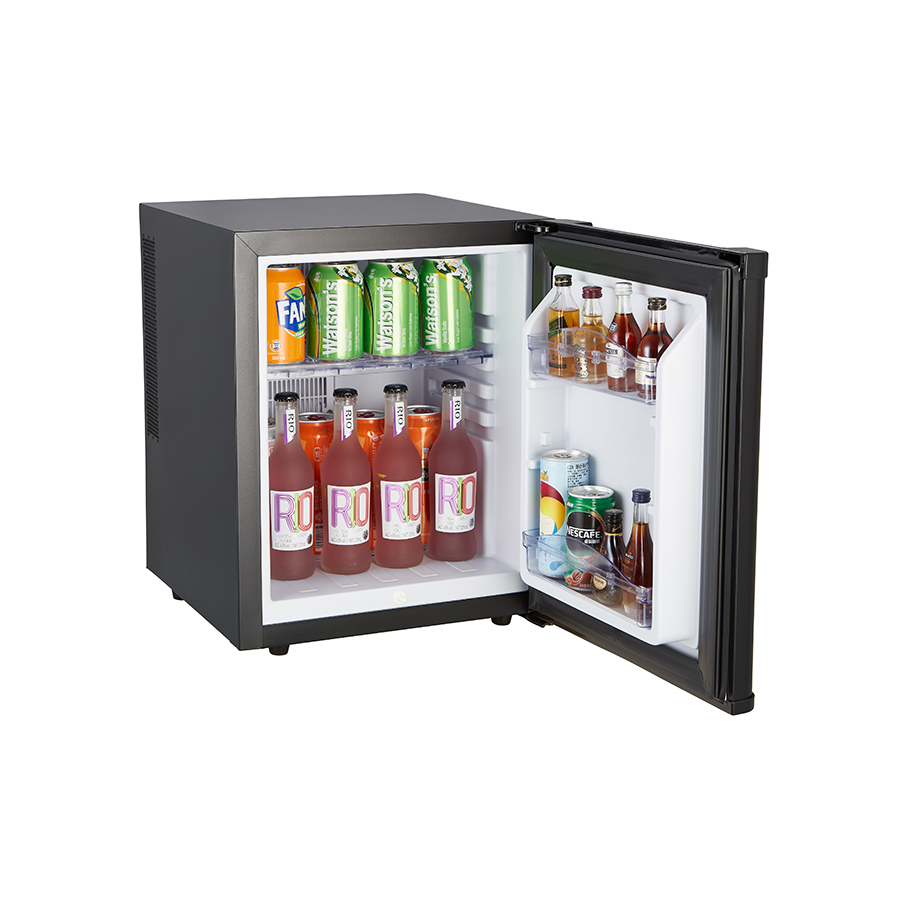
Assessing the physical components that prevent excess ambient moisture from entering the unit is critical for long-term performance. Door gasket integrity is the primary defense against moisture ingress. Micro-tears, dirty seals, or compressed magnetic gaskets allow a continuous stream of humid room air to enter the cooling cavity. Structural sealants also matter. High-quality appliance-safe silicone and foam sealants must be used to seal structural cracks and joints in the chassis construction. Physical door alignment and hinge sagging can break the perimeter seal, rendering even the best gasket useless.
Deploying a glass door mini fridge introduces specific challenges regarding thermal bridging. Single-pane glass offers virtually no insulation. The cold interior temperature transfers directly to the outer surface, causing the exterior to sweat in humid environments. Simultaneously, the interior glass fogs up as warm air hits the cold surface during door openings. Double-paned, argon-filled glass doors are necessary to prevent this thermal transfer. The argon gas acts as an insulating barrier, keeping the outer glass dry and the interior visible.
The structural layout of the appliance also dictates moisture control. Single-compartment thermoelectric designs are more prone to frost build-up than units with completely isolated thermal zones. Without a physical barrier, moisture migrates freely throughout the cabinet. Internal circulation fans mitigate this by preventing localized freezing and ensuring even moisture distribution toward the drain port. A strong internal fan keeps air moving across the cold plate. This encourages moisture to condense uniformly and drain efficiently rather than freezing into solid blocks of ice.
Comparing thermoelectric condensation management against alternative silent cooling technologies reveals distinct operational differences. The ammonia-water-hydrogen cycle in an absorption mini fridge interacts with ambient moisture differently than a solid-state Peltier module. Absorption units utilize a broader network of cooling fins inside the cabinet. This larger surface area means condensation spreads out over a wider space. In contrast, a semiconductor unit concentrates condensation on a highly localized cold plate.
Scalability and maintenance overheads differ significantly between the two technologies. Managing a fleet of thermoelectric units primarily involves clearing drain tubes and wiping down gaskets. The solid-state nature of the Peltier module means there are no moving fluids or complex piping systems to maintain. In contrast, absorption units require strict leveling to function correctly. The gravity-fed ammonia cycle stalls if the unit sits at an angle. Furthermore, absorption units demand highly specific ventilation clearances to dissipate the intense heat generated by the boiler tube. Failing to maintain these clearances in an absorption unit not only causes condensation issues but completely halts the cooling process.
Operational protocols are necessary to prevent condensation failure post-installation. User behaviors heavily influence moisture levels. Placing hot, unsealed, or room-temperature items directly into the fridge causes rapid moisture release as the items cool. The compounding effect of frequent or prolonged door openings by guests introduces massive amounts of humid air, overwhelming the evaporation pan.
Installation clearances directly impact the unit's ability to manage water. Inadequate rear ventilation prevents the external drip tray from evaporating water. The warm air generated by the exterior heat sink must escape. If trapped inside a cabinet, the evaporation pan stays cold, leading to rapid overflow. Cabinetry clearance requirements for built-in units must be strictly followed to ensure adequate airflow.
Routine maintenance protocols keep these systems functional. Standard Operating Procedures for housekeeping should include specific checks for a hotel beverage cooler. Staff must execute the following steps regularly:
Inspect the magnetic door gaskets for tears, compression, or loss of magnetism.
Clear the internal drain hole of dust, food particles, or debris using a small flexible brush.
Check the door hinge alignment to ensure the door sits perfectly square against the chassis.
Clean sticky residue off the door seals with a mild detergent to restore a tight closure.
Verify the external evaporation pan is seated correctly over the heat sink and free of blockages.
Audit current ambient humidity levels in deployment locations using digital hygrometers to determine the necessary evaporation capacity.
Request data on gasket durability and replacement procedures from manufacturers to ensure long-term seal integrity.
Test a single unit's evaporation efficiency in a high-humidity environment before committing to a bulk order.
Specify units with auto-defrost capabilities and heated evaporation pans if deploying in humid climates.
A: The internal heat sink operates below freezing to cool the air. Restricted airflow, thin cabinet insulation, or continuous running without cycling can cause normal condensation to freeze solid on the interior walls instead of draining properly.
A: Check the internal drain hole for blockages like dust or debris. Clean sticky residue off the door seal to ensure a tight closure, and verify the door alignment is completely square so warm air cannot leak inside.
A: Yes, if it uses single-pane glass. Single-pane glass lacks insulation, leading to thermal bridging and condensation on the exterior. Double-paned models filled with argon gas are recommended for humid environments to prevent this sweating.
A: A semiconductor unit experiences localized condensation directly on the cold plate. An absorption unit features broader cooling fins, causing condensation to spread over a larger internal surface area, which changes how the drip tray collects the moisture.
A: Absolutely. Compromised seals and unsealed chassis joints allow a continuous flow of humid room air into the fridge. This constant influx of moisture quickly overwhelms the unit's evaporation capacity, leading to severe water pooling.
A: While passive desiccants like silica gel absorb moisture, they require frequent replacement. They are generally reserved for sealed medical storage rather than frequently opened beverage coolers, where the constant introduction of new humid air renders them impractical.